






Find us on...
By Christine Lawson, Senior Affairs Manager, Sustainability, CTPA
The very hot and dry summer we had in the UK invites us to reflect on how water should continue to be a focus for our industry. Water is often treated as a background resource, readily available, inexpensive and reliable; it is central to nearly every stage of the value chain of cosmetic products, from how much water is required for ingredient cultivation and production, to manufacturing, formulation and the water necessary to use or remove a product. Yet, at the same time, rising demand, significant water depletion and pollution are a substantial risk, creating operational and supply chain disruptions for business, as well as increased costs.
Why it matters for the cosmetics and personal care sector
Cosmetics and personal care products are fundamentally linked to water. Water is commonly used as a formulation ingredient, in cleaning and manufacturing processes, in the production of raw materials, and by consumers during product use and removal, with showers being the biggest use of water within a UK household[1].
As awareness of water stress grows, consumers may increasingly question products that require significant water to make, use or rinse away. In markets impacted by drought restrictions, products that are easier to use with less water may become more relevant and attractive. This provides an opportunity for companies to reduce water demand not only inside factories, but also through formulation choices, product formats, packaging decisions and consumer guidance.
Water stewardship: the mindset shift
A lot can be done, not just in understanding and minimising water use, but also in changing a mindset from efficiency to stewardship. The transition to water stewardship and a water-secure future will require transformation of business models, practices and products, such as:
- mapping water use by manufacturing sites, suppliers, raw materials and consumers in-use;
- reducing water in operations by investing in efficient cleaning systems, water recirculation, filtration and better wastewater management;
- innovating to explore concentrated product formats or anhydrous products such as solids, powders or oil-based, or no/easy-rinse formats;
- redesigning packaging as more compact formats can reduce transport impacts and may open opportunities for lower-material packaging choices;
- working with your surroundings to investigate whether water can be shared through collective action beyond a company’s own facilities.
CTPA is here for you
We all need to treat water as a valuable resource, designing for resilience and innovating to anticipate consumer needs. For companies willing to act, water stewardship will strengthen business continuity, support responsible growth and create products that are better suited to a volatile world. The challenge is significant, but so is the opportunity to build a more resilient, innovative and trusted industry by changing how water is valued, used and protected.
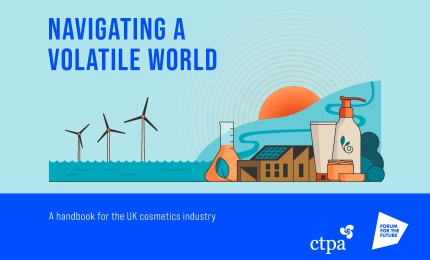
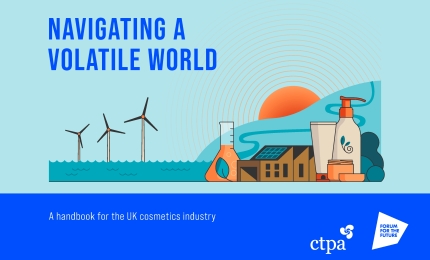
For its part, CTPA is encouraging companies to think more strategically about the ‘Future Consumer’. Earlier this year, CTPA published its Sustainability Handbook, ‘Navigating a Volatile World’ to inspire a creative approach to the opportunities for new products, new markets and new ways of operating.
The handbook contains an overview of some of the major sustainability trends, including water, outlines how businesses are responding and how the trends are impacting consumers’ lives. It explores what action could look like for your business, and for your products. It also includes a few exercises throughout to bring the issues to life and to help you explore options, design strategies and innovate your products. Further information and a link to the handbook can be found here.
Members can also get in touch to schedule confidential Sustainability one-to-one meetings, where we will highlight some of the available resources to help inform future products, operations and strategies. Visit CTPA’s member Extranet to schedule your meeting here: Confidential Member One-to-One Meetings on Sustainability.
[1] See ‘At Home with Water’ Report from the Energy Saving Trust