

Cosmetic and personal care products are part of everyday life, from oral care, soap, antiperspirants and deodorants, sun protection to shampoos, conditioners, hand washes, skin care, fragrance, makeup, hair styling and grooming products for women and men.
Cosmetic and personal care products also have a positive influence on self-esteem. The importance of being able to keep ourselves clean, protected and able to choose how we present ourselves to others cannot be underestimated.
Research undertaken by both CTPA and Cosmetics Europe give us many insights into how cosmetics and personal care products are absolutely essential to our lives.
European Consumer Perception Study 2026
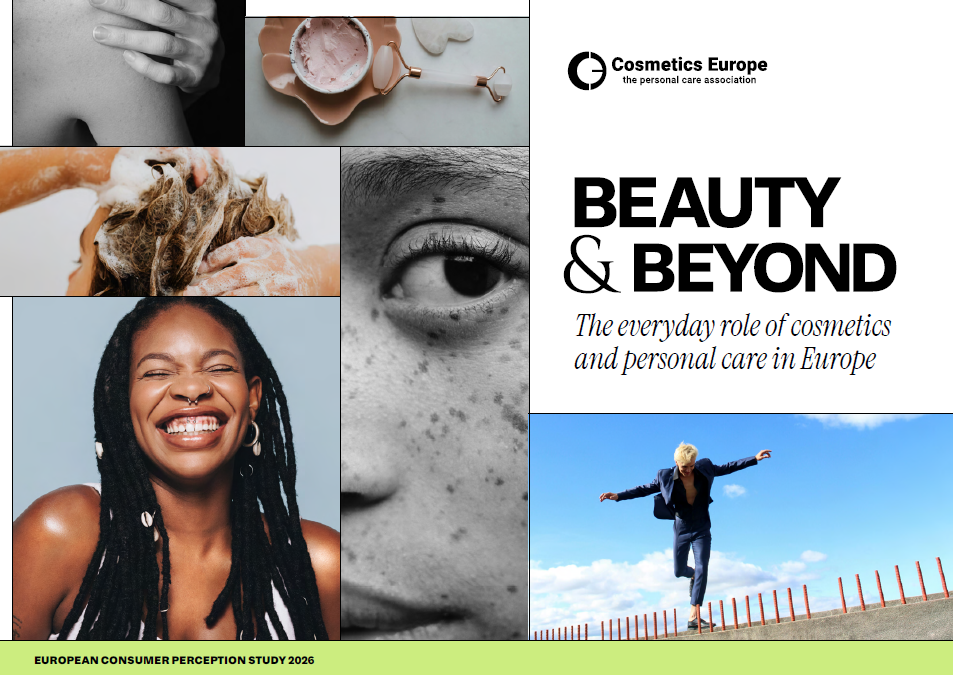
‘Beauty and Beyond: The everyday role of cosmetics and personal care in Europe’
Cosmetics Europe commissioned a new pan-European consumer perception study1 to explore how Europeans use and value cosmetics and personal care products in daily life. The research examines the role these products play in everyday life and attitudes towards wellbeing, confidence, participation, trust and healthy ageing.
The full report can be downloaded here. Below are some of the key takeouts, with corresponding UK figures.
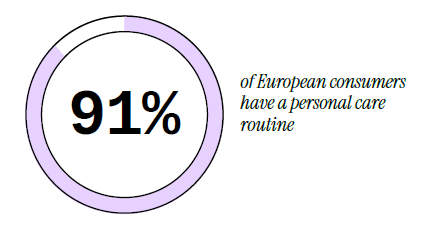
- 91% of European consumers have a personal care routine ~ UK figure: 94%
- 76% of European consumers see cosmetics and personal care products as important or very important in their daily life ~ UK figure: 80%
- 73% say their personal care routines help them participate and engage with confidence at work, school and in social interactions ~ UK figure: 82%
- 71% say their personal care routines help them feel focused, prepared and able to perform well in daily life ~ UK figure: 81%
Which products do consumers use
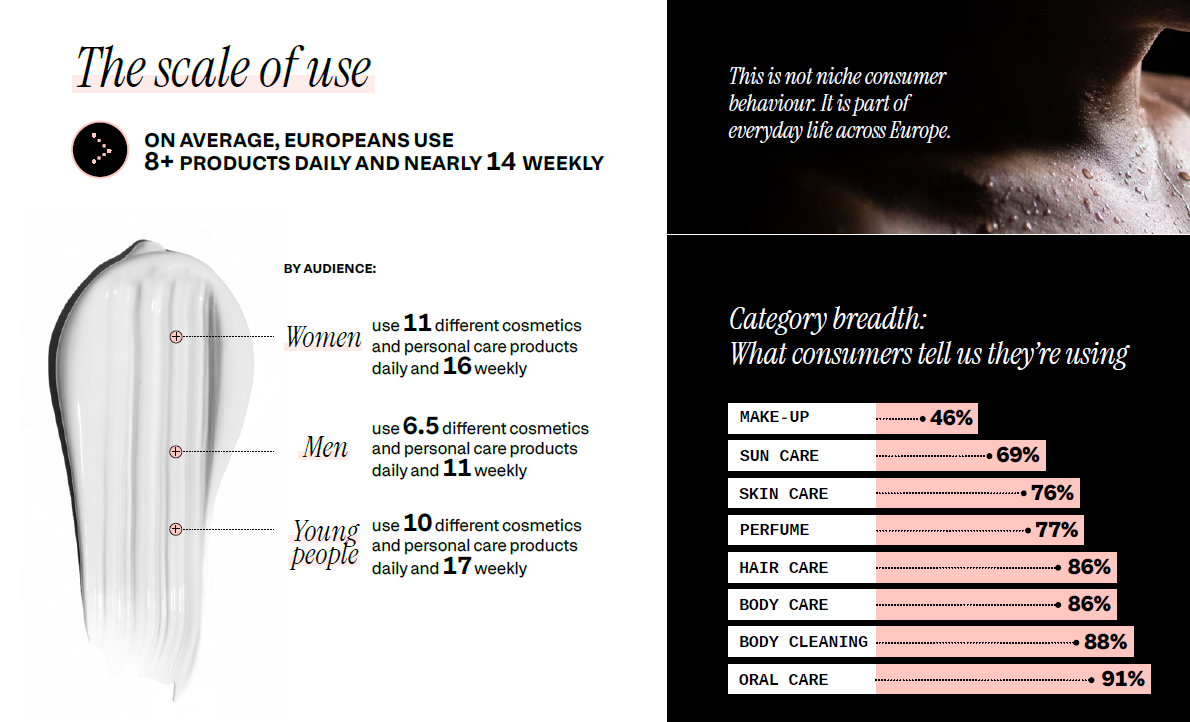
On average Europeans use 8+ products daily and nearly 14 weekly.
These findings fundamentally change how cosmetics and personal care products should be understood. Europeans do not treat these products as occasional extras. They are everyday essentials, woven into the practical realities of modern life.
- Use of oral care products in Europe: 91% ~ UK figure: 92%
- Use of body cleaning products in Europe: 88% ~ UK figure: 91%
- Use of body care products in Europe: 86% ~ UK figure: 89%
- Use of hair care products in Europe: 86% ~ UK figure: 87%
- Use of skincare products in Europe: 76% ~ UK figure: 81%
- Use of Sun protection products in Europe: 69% ~ UK figure: 72%
- Use of perfume in Europe: 77% ~ UK figure: 77%
- Use of makeup in Europe: 46% ~ UK figure: 48%
Everyday products, everyday benefits
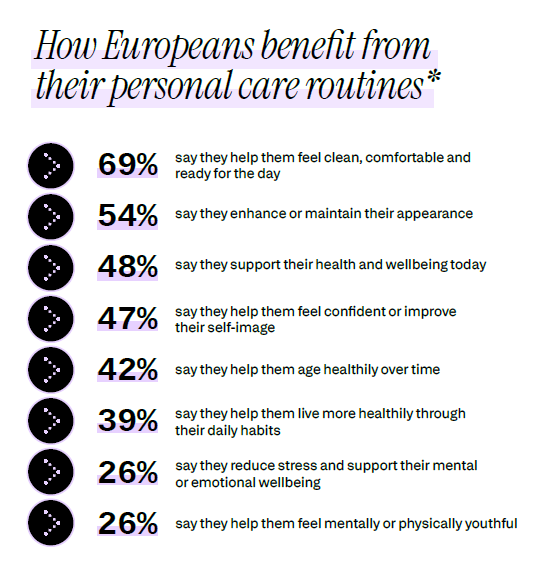
The picture that emerges is clear: Consumers associate cosmetics and personal care products with benefits that extend beyond their immediate function. Whether helping people feel refreshed, positive, comfortable or confident, these products play a broader role in everyday life than appearance alone would suggest.
Corresponding UK figures
- "Helps me feel clean, comfortable and ready for the day": 78%
- "Enhances or maintains my appearance": 62%
- "Supports my health and well-being today": 58%
- "Helps me feel confident or improves my self-image": 58%
- "Helps me age healthily over time": 53%
- "Helps me live more healthily through my daily habits": 47%
- "Reduces stress and supports my mental or emotional well-being": 34%
- "Helps me feel mentally or physically youthful": 35%
Confidence, participation and inclusion
Confidence is about the practical realities of how people show up in work, in education and socially. When people feel comfortable in themselves, they are more likely to engage, contribute and participate fully in society. Across Europe, consumers consistently connect cosmetics and personal care products with that sense of readiness.
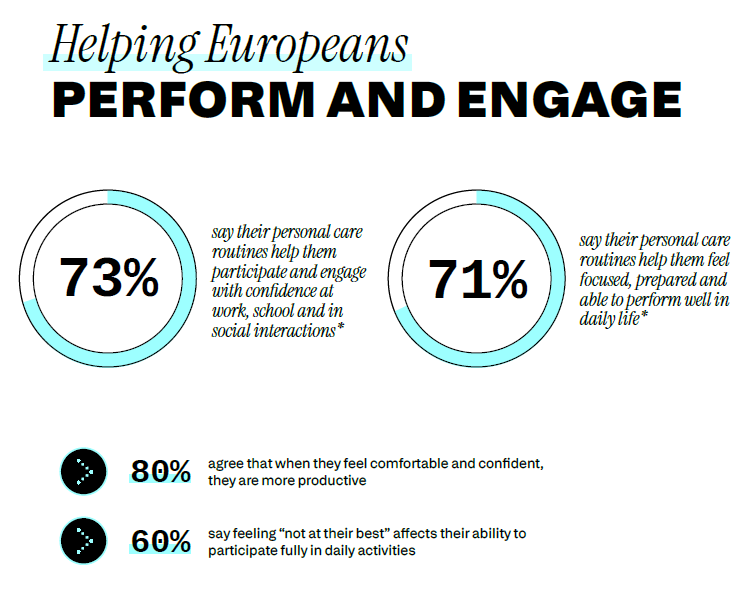
- "My personal care routine, including the products I use, helps me participate and engage with confidence at work, school, daily life and in social interactions": 73% ~ UK figure: 82%
- "My personal care routine, including the products I use, helps me feel more focused, prepared or able to perform well at work, school or in daily life": 71% ~ UK figure: 81%
- "When I feel comfortable and confident, I am more productive": 80% ~ UK figure: 84%
- "Has feeling “not at your best” affected your ability to participate fully at work, school or in daily life?": Yes (Europe): 60% ~ Yes (UK): 60%
Living well today, ageing well tomorrow
That shift is visible across Europe. The conversation about ageing is no longer only about lifespan, but about how people maintain health, independence and quality of life as they age. Consumers are already thinking in terms of prevention, resilience and health-span. Governments are grappling with ageing populations and healthcare sustainability. Public debate is placing greater emphasis on proactive living, not reactive treatment. This is the context in which cosmetics and personal care should be understood, because European consumers already place these products within that wider culture of healthy living.

"To what extent do you think learning about simple daily personal care routines can help people improve their well-being today, maintain healthy habits and age in a healthy way?":
It is helping (Europe): 94% ~ It is helping (UK): 97%
Download the full report here.
For any questions on the UK figures, please contact CTPA.
References
1 European Consumer Perception Study 2022 was conducted on behalf of Cosmetics Europe by Ifop in March 2022. Over 6000 consumers across ten European countries, i.e. Bulgaria, Denmark, France, Germany, Italy, Netherlands, Poland, Spain, Sweden and UK, were interviewed via an online questionnaire. Respondents were representative of each country’s gender and age group distribution.
* In this survey, a personal care routine is defined as a set of intentional daily or regular habits, practices and products people use to care for their body, appearance, and everyday well-being. This includes everyday cosmetics and personal care essentials.